DIY Ambient Orb: Redux
25 Nov 2008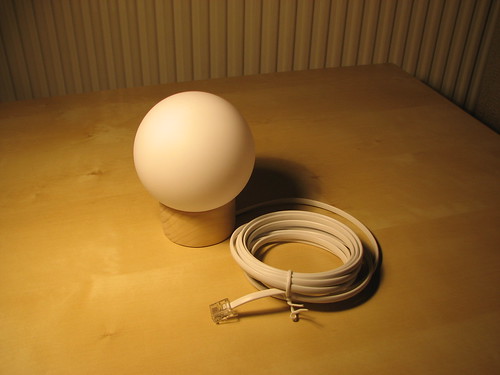
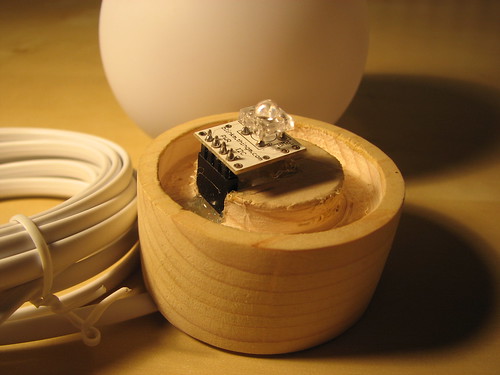
/************************************************ * Enables a BlinkM to be controlled over MQTT. * - subscribes to the topic 'blinkm' * - expects messages of the format 'RRGGBB' * - doesn't do any error handling * * Nicholas O'Leary * http://knolleary.net ************************************************/ #include#include #include #include byte mac[] = { 0xDE, 0xAD, 0xBE, 0xEF, 0xFE, 0xED }; byte ip[] = { 172, 16, 0, 50 }; byte server[] = { 172, 16, 0, 100 }; void callback(char* topic, byte* payload,int length) { byte a = toHex( payload[0],payload[1] ); byte b = toHex( payload[2],payload[3] ); byte c = toHex( payload[4],payload[5] ); BlinkM_fadeToRGB( 0x09, a,b,c); } PubSubClient client(server, 1883, callback); void setup() { BlinkM_beginWithPower(); BlinkM_setAddress( 0x09 ); BlinkM_stopScript( 0x09 ); Ethernet.begin(mac, ip); if (mqttClient.connect("blinkr")) { mqttClient.subscribe((uint8_t*)"blinkm"); } } void loop() { mqttClient.loop(); delay(500); } // a really cheap strtol(s,NULL,16) - taken from BlinkMTester #include uint8_t toHex(char hi, char lo) { uint8_t b; hi = toupper(hi); if( isxdigit(hi) ) { if( hi > '9' ) hi -= 7; hi -= 0x30; b = hi<<4; lo = toupper(lo); if( isxdigit(lo) ) { if( lo > '9' ) lo -= 7; lo -= 0x30; b = b + lo; return b; } } return 0; }</pre>